Ten State Senate Races That Will Decide Midterm Control
Voters in key states like North Carolina and Texas are casting ballots in closely watched contests that determine congressional power.
By Aiko Soto ·

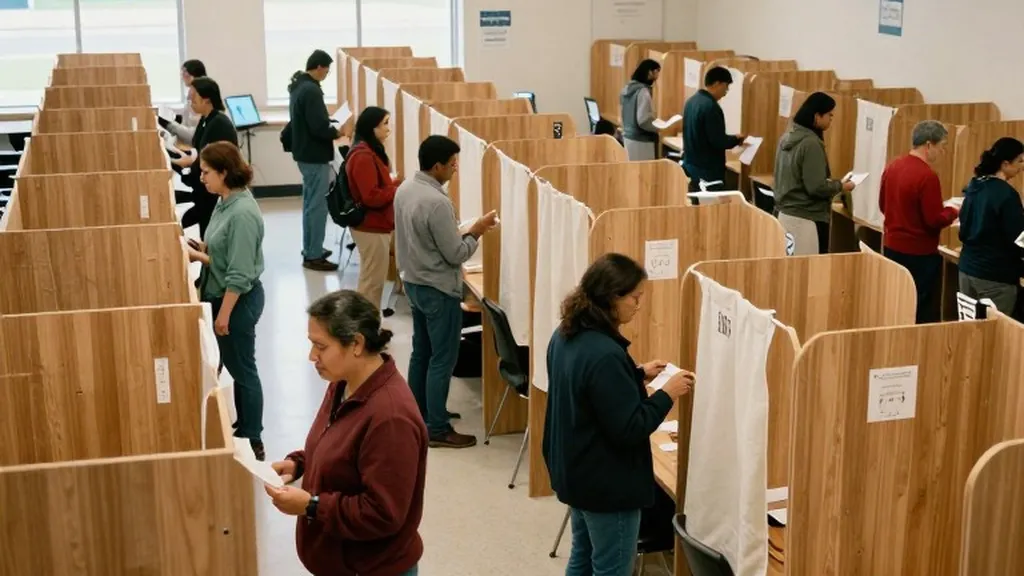
Voters across the United States are heading to the polls on Tuesday, November 3, 2026, to decide the balance of power in Congress halfway through President Donald Trump's second term. The midterm election determines which party controls the legislative branch for the remaining two years of the administration. Republicans currently hold 53 Senate seats, while Democrats hold 45, along with two independents who caucus with the Democratic side. Democrats need a net gain of four seats to secure a majority, whereas Republicans can afford to lose only two. The outcome of these races will shape the legislative agenda, oversight capabilities, and the political landscape for the next two years.
In North Carolina, the race for an open Senate seat pits former Democratic Governor Roy Cooper against former Republican National Committee chair Michael Whatley. This contest follows the retirement of Senator Thom Tillis, who stepped down after clashing with the President. The state voted for Trump by a margin of 3.3 percent in the 2024 presidential election. Both parties view this race as critical, with Democrats seeking to expand their map and Republicans aiming to hold their ground in a state that uses a new congressional map for this cycle.
Georgia presents another pivotal battle, where incumbent Senator Jon Ossoff faces off against Republican Representative Mike Collins. This contest is significant because the state voted for Trump by just 2.2 percent in 2024. Analysts have rated this race as leaning or likely Democratic, making it a key target for the opposition. The outcome here will heavily influence whether Democrats can achieve the four-seat net gain required for a Senate majority. Voters in the state are weighing the national mood against local economic concerns.
In Ohio, the special election for the remainder of JD Vance's term features former Democratic Senator Sherrod Brown against Republican Senator Jon Husted. This race is taking place in a state that voted for Trump by 11.2 percent in the previous cycle. The presence of a special election adds complexity, as the winner will serve out the rest of the term rather than starting a new six-year term on January 3, 2027. Both candidates are campaigning on their records and their stance on the current administration's policies.
Michigan offers a distinct profile as an open seat following the retirement of Senator Gary Peters. Republican former Representative Mike Rogers is competing against Democrat Abdul El-Sayed. This race gained attention on Sunday when El-Sayed's former primary opponent, Haley Stevens, endorsed Rogers. The state voted for Trump by a narrow 1.4 percent margin in 2024, making it a competitive toss-up to lean Democratic race. The endorsement has shifted the dynamics of the campaign, with both sides claiming momentum in the final days before polls close.
Texas is deciding the fate of a Senate seat vacated by John Cornyn, with Republican Attorney General Ken Paxton facing Democrat James Talarico. Trump backed Paxton over Cornyn in the primary, signaling a preference for a more aligned candidate. The state voted for Trump by 13.6 percent in 2024. This race is part of a broader Republican effort to hold the Senate, with many candidates keeping a respectful distance from the President's recent claims about voting fraud. The outcome in Texas will be a major indicator of Republican strength in the South.
Maine stands out as a toss-up race across all four major rating systems, with incumbent Senator Susan Collins facing Democratic former state Senate President Troy Jackson. The Associated Press notes that economic strain and tariffs have made the state competitive, despite its historical leanings. The state voted for Kamala Harris by 6.9 percent in 2024, making it one of the few Republican-held seats in a state that supported the Democratic presidential nominee. This race is crucial for Democrats, who need to flip at least one Republican seat in a state that voted for the opposing party in 2024.
New Hampshire is holding an open seat following the retirement of Senator Jeanne Shaheen, with Democratic Representative Chris Pappas competing against former Republican Senator John E. Sununu. The state voted for Harris by 2.8 percent in 2024, providing a slight advantage to the Democratic candidate. This race is being watched closely because of the state's history of competitive elections and its role in the broader Northeastern political landscape. Voters are evaluating the candidates' stances on economic issues and their relationship with the current administration.
Minnesota is deciding the seat of retiring Senator Tina Smith, with Democratic Lieutenant Governor Peggy Flanagan and Republican Michele Tafoya among four candidates. Tafoya is a former sports broadcaster, bringing a different background to the race. The state's political dynamics are fluid, and the race is seen as a bellwether for Democratic performance in the Midwest. The outcome here will contribute to the overall picture of whether Democrats can achieve a majority in the Senate.
Kansas has emerged as a central battleground for Senate control, despite being a reliably Republican state. The race features incumbent Senator Roger Marshall, with the state having voted for Trump by 16.2 percent in 2024. President Trump ended his final rally of the week in Salina, Kansas, urging voters to pretend he was on the ballot. This highlight of the state in the President's schedule underscores its importance in the national narrative. The race is rated as a toss-up to lean Republican, making it a key test for the incumbent party.
Alaska presents a unique challenge with the Trump administration filing a lawsuit related to the certification of the Senate result. The race is rated as a toss-up to lean Democratic, a notable shift in a state that voted for Trump by 13.1 percent in 2024. This legal intervention adds a layer of complexity to the election, with Democrats expressing concern over potential interference. The state's participation in this race reflects the broader national tension over election administration and the role of the federal government in the process.