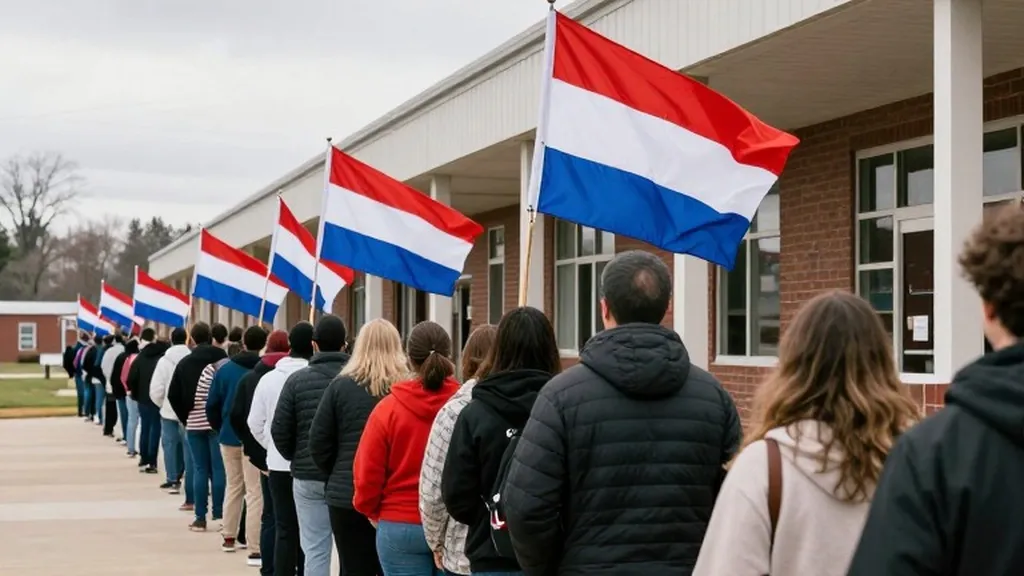
Midterm Spotlight Shifts to New States as Election Officials Brace for Scrutiny
Officials in traditionally safe states report increased anxiety over minor errors, fearing the same national backlash that targeted swing state clerks after 2020.
By Aiko Soto ·
The pressure on local election workers is spreading beyond the usual battlegrounds.
Tina Barton, who served as city clerk in Rochester Hills, Mich., in 2020, says the difference between running an election in a competitive state and a non-competitive one is how errors are handled. In a non-battleground, a human mistake is easily explained and often not a story. In a battleground, the same error can become a massive conspiracy.
Barton’s office made a mistake in 2020 by sending an unofficial absentee vote file twice. The first file did not appear to send, so they resent it. The error did not impact actual votes and was corrected in the tally the next day. However, the chairwoman of the Republican National Committee accused her office of improperly giving votes to Democrats. Barton received death threats, including a voicemail stating she deserved a throat to the knife for frauding out America of a real election.
Officials in swing states like Michigan, Georgia, and Arizona are now more accustomed to that level of scrutiny. However, this year's midterms will decide control of the U.S. House and Senate in races spread across the country. Local officials in places like Iowa, Alaska, New York, and Kansas may find themselves in the national spotlight for the first time.
Chris McGinn, executive director of the Texas Association of County Election Officials, notes that Texas has been a reliable Republican state for nearly 50 years. That history has meant fewer competitive elections and less pressure on voting officials in federal cycles. McGinn says his job is preparing clerks for the possibility that the state's U.S. Senate race could decide the balance of power in that chamber. The Republican nominee for that seat sought to help President Trump overturn his 2020 election loss. McGinn tells members they do not want to be Florida in 2000.
Wendy Link, supervisor of elections for Palm Beach County, Fla., says her office still regularly receives what she calls love letters. She described emails stating that an army would be sent to arrest her and that she would spend time in Guantanamo Bay. Link said she does not think the emails are intended to intimidate her, but she is not reaching out for a security detail.
Barton, now vice president of the Committee for Safe and Secure Elections, worries the situation could escalate again if the midterms are close. The organization doubled the number of trainings it led compared to 2024. Barton told officials in competitive districts that they better be on their game.