Markets brace for midterms: AI costs, debt fights, and trade shifts
Investors face a complex landscape where congressional control determines the trajectory of federal spending, interest rates, and global alliances.
By Ayanda Boateng ·

Election Day has arrived with markets closely monitoring the outcome of the 2026 midterms, an event that will determine which party controls Congress for President Donald Trump's final two years. The Associated Press describes the election as a referendum on the president's second term, noting that voters are struggling with high prices and are angry over an unpopular war with Iran. This political uncertainty directly intersects with global economic concerns, particularly regarding artificial intelligence spending and the federal debt ceiling, as noted by Reuters.
Wall Street is watching for more than just the control of Congress. The results could add to investor concerns about the sustainability of massive AI spending and the outcome of debt ceiling negotiations. The composition of the new Congress will dictate the legislative path for these critical economic issues, creating a binary risk for equities and bonds. If Democrats gain control of either chamber, the potential for increased oversight and spending debates could alter the fiscal outlook for the remainder of the term.
35% of U.S. Adults approve of Trump's job performance, while 25% approve of his handling of the economy. Approximately seven in ten say the country is heading in the wrong direction, with most blaming the president for high prices. These sentiments suggest that the economic mood is a primary driver of voter behavior, which in turn will shape the fiscal policies that markets must now price in. The tension between the current administration and the opposition is expected to influence the pace of trade negotiations and alliance commitments.
Republican committees have outraised and outspent Democratic committees, aided by Trump-affiliated groups and Elon Musk. However, at the candidate level, Democrats have outraised their opponents. This financial disparity highlights the significant capital deployed in this election, with 88.1% of Republican general election TV ad spending directed at states and districts Trump won in 2024. The intensity of the spending reflects the high stakes involved in securing the legislative leverage needed to pass or block key economic legislation.
Voters are also weighing the impact of trade and global alliances. The AP notes that economic strain and tariffs have made states like Maine competitive, indicating that trade policy is a central issue for swing voters. The outcome in these battleground states will signal the level of bipartisan support for current trade strategies. A shift in congressional control could lead to renegotiations with key allies or stricter enforcement of trade rules, both of which have significant implications for global supply chains and corporate earnings.
The debt ceiling remains a looming threat that markets cannot ignore. With the new Congress set to take office in January 2027, the timing of the next fiscal fight is already under scrutiny. Reuters emphasizes that the results of the midterms will influence the dynamics of these negotiations. A unified Republican Congress might streamline the process, while a divided government could lead to brinkmanship that impacts credit ratings and borrowing costs. Investors are closely tracking the rhetoric from both parties to gauge the likelihood of a clean resolution.
AI spending is another focal point for the global market. The massive capital expenditure required for data centers and chips is often supported by federal incentives and tax policies. The Associated Press notes that the election is a referendum on the administration's approach to technology and infrastructure. If the new Congress takes a different view on subsidies and regulation, the investment thesis for the AI sector could shift. This uncertainty is a key factor in the current volatility observed in tech stocks and related infrastructure plays.
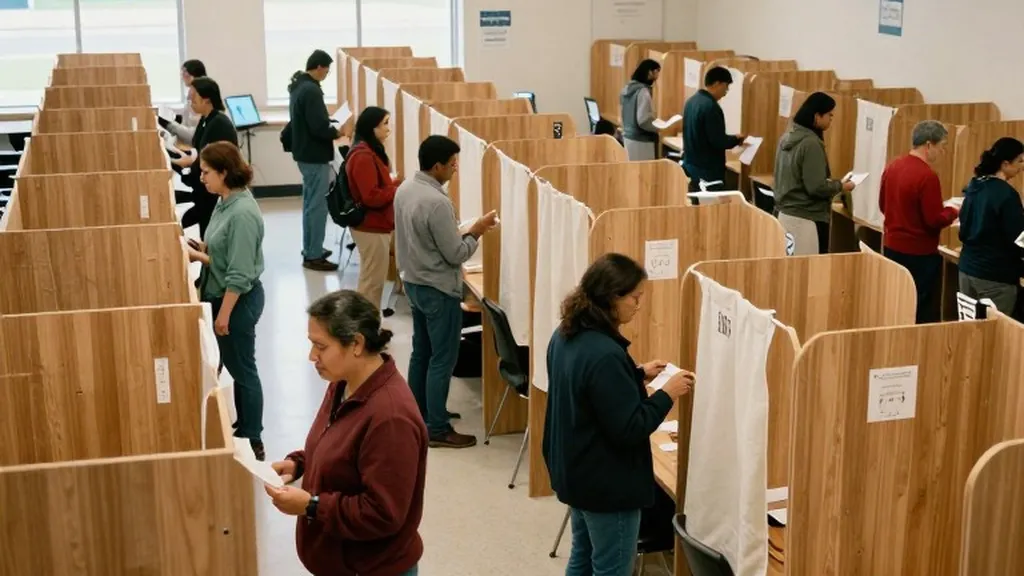
More than 57 million people had already voted as of Monday, surpassing the early vote of four years ago in many closely watched states. This high level of early participation suggests a strong mandate for the issues being decided. Republicans were bracing to lose the House and fighting to hold the Senate, while Democrats were cautiously optimistic. This tight race underscores the potential for a divided government, a scenario that often leads to legislative gridlock but can also force compromise on key economic issues.
The Associated Press quotes RNC Chairman Joe Gruters saying, 'Everything depends on turnout. If we turn out our voters, we win, and that's what we've been planning for.' In contrast, DCCC Chair Rep. Suzan DelBene states, 'The American people are angry. They want change.' These statements reflect the strategic focus on mobilization and the broader desire for a shift in policy direction. The outcome will likely determine whether the current pro-business and deregulatory environment is maintained or adjusted in response to voter concerns about the cost of living.
International allies are also watching the results to assess the stability of U.S. Foreign policy. The Associated Press notes that the election will influence the strength of U.S. Commitments to global partners. A change in congressional control could affect defense spending and trade agreements, which are critical for maintaining economic stability abroad. The interplay between domestic politics and international relations is a key variable for global markets, particularly in sectors sensitive to geopolitical risk and trade flows.
The U.S. Postal Service has added hours, staff, and special lines to ensure mail ballots are counted on time. This logistical effort is part of a broader administration of the election that has faced scrutiny, including a federal judge temporarily barring the Trump administration from carrying out a plan to prevent noncitizen voting. These administrative details, while procedural, contribute to the overall narrative of a contested and high-stakes election. The final count will provide clarity on the direction of fiscal policy, trade, and global alliances for the next two years.