Seven Dead in Jordanian Church Shooting
A rare assault on a Greek Orthodox congregation in Karak resulted in seven fatalities and 34 injuries during a funeral service.
By Ayanda Boateng ·
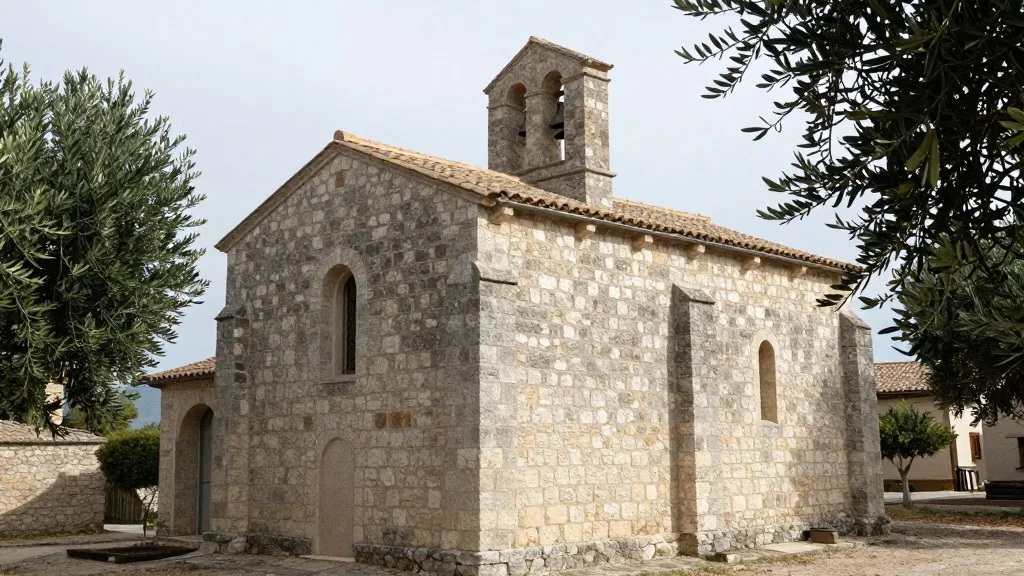
For the first time in recent years, a funeral gathering in southern Jordan was interrupted by gunfire, leaving seven people dead and 34 others wounded. The attack targeted a Greek Orthodox church in the village of Hammoud, located in the Karak governorate. Authorities described the incident as an unusual strike against the Christian minority within a nation where the majority of the population is Sunni Muslim.
Interior Minister Mazen Al-Faraya addressed the media to confirm the casualty figures and identify the perpetrators as a group of extremists. He stated that a manhunt for the gunmen was actively underway following the violence. The public security directorate provided details on the sequence of events, noting that the assailants stormed the church compound before opening fire.
Witnesses and official reports indicate that the attackers arrived in a vehicle that stopped near the funeral procession. Two men holding pistols and a third carrying a long gun were seen disembarking. They fired from a street entrance before advancing into the church grounds. Footage broadcast by the state network Al-Mamlaka captured the moment, showing the gunmen in casual clothing firing continuously before fleeing the scene.
An eyewitness speaking to the state broadcaster estimated that between 150 and 200 individuals were present in and around the church at the time of the shooting. The witness reported that the gunfire lasted for approximately five minutes without pause. Most of those who were killed were estimated to be between the ages of 50 and 70, suggesting that the congregation was largely composed of older community members.
The Karak region, situated 110 miles south of the capital Amman, is known for its significant Christian population. Minister of Government Communications Mohammed Al-Momani confirmed that security forces were conducting a thorough investigation into the attack. The location has a history of violence, having experienced deadly ambushes in previous years, including a series of attacks on police in 2016 that left ten people dead.
King Abdullah II reacted swiftly to the news, promising the harshest retaliation against those responsible for the shooting. He took to social media to declare that every Jordanian life is precious and that the nation would strike with an iron fist against those who dare to threaten its stability. His statement aimed to convey a message of strength and resolve to the public.
The attack also drew international attention, particularly from the region. Lebanese President Joseph Aoun, the only Christian head of state in the Arab world, condemned the shooting as a heinous terrorist attack. In a statement issued by his presidency, Aoun noted that the violence reaffirmed the idea that terrorism has no specific religion or homeland. He added that the primary aim of such acts is to strike at coexistence and spread strife among communities.
Security forces are currently focused on locating the fleeing gunmen and determining the specific extremist group responsible. The investigation is ongoing as officials work to secure the area and support the injured. The incident has reignited conversations about the safety of minority communities in the region and the effectiveness of security measures in preventing similar assaults in the future.