NTSB Begins Lengthy Probe Into Florida Learjet Crash
Investigators are collecting debris from a crash that killed nine people, a process that typically takes 12 to 18 months to conclude.
By Chioma Kuznetsov ·
The National Transportation Safety Board has launched an investigation into a business jet crash in Florida that killed all nine people on board. The aircraft, a Learjet operating for Upper Jets, was bound for the Bahamas when it hit the ground.
NTSB member Tom Chapman said the agency's goal is to understand why the plane fell and to recommend changes to prevent similar accidents. He noted that the investigation is just beginning and will likely take more than a year to determine the exact cause.
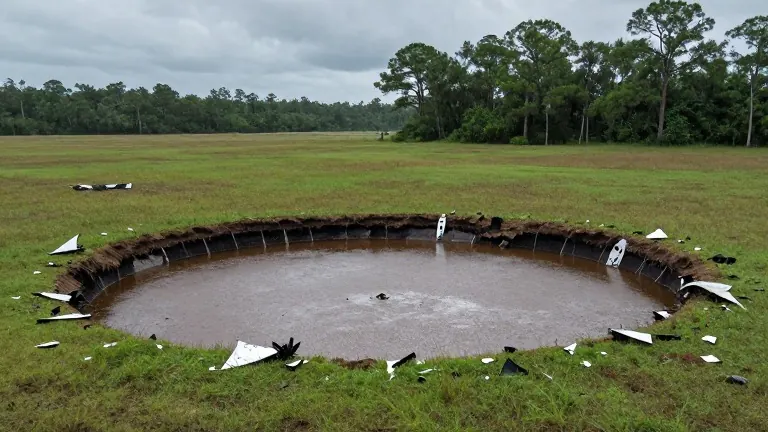
Investigators spent Tuesday collecting fragments of the aircraft. They located pieces of the elevator, a tail component that controls the nose angle, more than a mile from the main crater. This distance confirms the plane began to break apart before impact.
The search for the cockpit voice recorder is a priority. Chapman said the device could provide details on pilot communications as they lost control after encountering turbulence and ice. He added that while the recorder is important, investigators can still determine what happened without it.
Air traffic control recordings show the co-pilot reported the plane was being thrown up and down more than 700 feet. She requested a better route through the area. It remains unclear why the pilots did not fly around the storms.
Retired airline pilot John Cox questioned the decision to descend from a cruising altitude of 41,000 feet to 35,000 feet near the storm cells. He stated that staying at 41,000 feet offers a better view of the weather. He said he does not understand why the pilots came down.
Weather data will be a key focus of the probe. NTSB experts will work with the National Weather Service and the Federal Aviation Administration to analyze what the plane encountered. Maps show the Learjet flew directly into a small storm cell that worsened quickly.
Investigators will review maintenance records for the aircraft and interview officials from Upper Jets, air traffic controllers, and staff at the Texas departure airport. They will also collect bystander videos and surveillance footage to help reconstruct the final moments.
Torrential rains in Florida have complicated debris collection. The crater filled with water, potentially submerging parts of the plane. Investigators asked the public to report any found debris. The NTSB is currently handling over 1,200 active investigations with a staff of roughly 400 workers.
A preliminary report is expected within a month. It will provide factual details but will not include a probable cause analysis. The final report, which explains causes and offers safety recommendations, typically takes 12 to 18 months to complete.