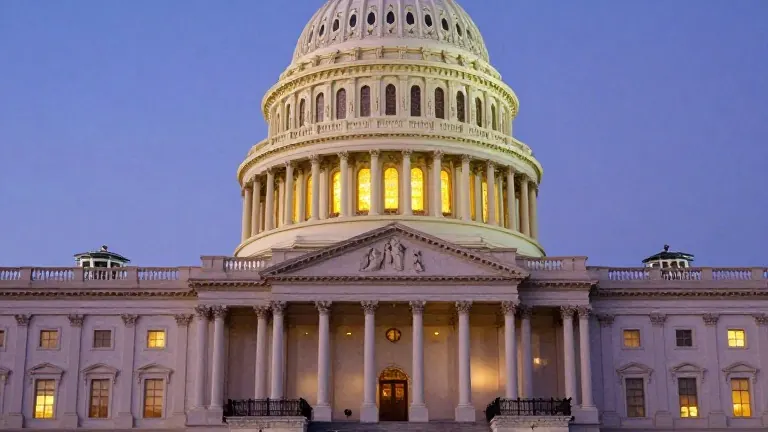
Democrats sweep Congress in 2026 wave election, gaining 43 House and 7 Senate seats
Republicans suffered their largest midterm losses in two decades, ceding control of both chambers to Democrats with a 250-157 House majority and a 54-44 Senate lead.
By Aiko Soto ·
The political landscape in the United States shifted decisively on Tuesday, November 3, 2026, as voters delivered a sweeping victory to the Democratic Party. The results mark one of the most significant transfers of power in modern history, with Democrats securing majorities in both the United States House of Representatives and the United States Senate. This outcome ends a period of divided government and places full legislative control in the hands of the party that previously served in the minority. The scale of the defeat for the Republican Party has prompted immediate analysis of the factors driving voter behavior across the country.
According to verified election results compiled from Ballotpedia and updated as of 4:00 PM Eastern Time on November 6, 2026, Democrats won at least 43 House seats. Of these gains, 42 were previously held by Republicans and one was held by an independent. In the Senate, Democrats captured seven seats, all of which had been occupied by Republicans. These net gains ensure that Democrats will hold at least a 250 to 157 majority in the House and a 54 to 44 majority in the Senate. The numbers represent a substantial shift in the balance of power in Washington.
The magnitude of the Republican losses in the Senate is historically significant. A net loss of at least seven seats places this election cycle in the top 20 percent of all election years in terms of seat swings against a president's party. Political analysts have previously defined this threshold as a wave election. While the House results have not yet reached the specific threshold for a wave, which requires a net loss of 48 seats, the 42 seats lost by Republicans are close to that mark. Uncalled races may still alter these totals, but the current data confirms a strong mandate for the opposition party.
Beyond the federal chambers, the results reflect a broad realignment in state government. Democrats won a plurality of state government trifectas and a majority of governorships for the first time since before the 2010 elections. This expansion of control allows the party to influence policy at the state level as well as the national level. The consistency of the results across different types of offices suggests that the shift was not limited to a few high-profile races but was a nationwide trend.
The new congressional leadership is already preparing to act on the agenda that voters supported. With control of both chambers, Democrats can now pursue legislative changes that were previously blocked by the minority status. The party has indicated plans to use its oversight and appropriations powers to review executive branch decisions. This includes investigations into the dismantling of the Department of Education and other administrative actions taken during the previous administration.
Republicans, now in the minority, are facing a challenging path forward. They must decide how to engage with the new majority while maintaining their base. The loss of so many seats in a single cycle is rare and often leads to internal party discussions about strategy and messaging. The Republican leadership has expressed frustration with the results, noting the difficulty of governing in opposition when the other party holds full control of the legislative process.
The election results also have implications for the balance of power in the Senate. With a 54 to 44 majority, Democrats have a comfortable margin for passing legislation. However, they may still face challenges in overcoming potential filibusters or securing bipartisan support for major bills. The House majority of 250 to 157 provides even more flexibility, allowing the party to pass bills with a wide margin of support. This numerical advantage is likely to influence the tone and scope of the legislative agenda in the coming months.
Voters in key states played a crucial role in determining the outcome. The results in these states align with broader trends seen in previous midterm elections, where the party not in power typically gains seats. However, the scale of the gains in 2026 exceeds the typical midterm swing. This suggests that voters were particularly motivated to change the direction of the government. The results will be closely watched as a benchmark for future elections and as a measure of public satisfaction with the current administration.
The transition of power in Congress will begin in January, when the new members take their seats. Until then, the current leadership will remain in place, but the dynamics of the chamber will shift as members prepare for their new roles. The incoming Democrats are expected to convene quickly to organize committees and set a legislative calendar. This period of transition is critical for establishing the party's priorities and building momentum for the first full session of the new Congress.
The election results send a clear message from the American public about their desire for change in the federal government. The sweep of both chambers provides Democrats with the tools to implement their policy goals, but it also places a significant burden on them to deliver results. The next two years will be a test of whether the party can translate its electoral victory into effective governance. The coming months will reveal how this new balance of power shapes the nation's political and economic landscape.