Democrats Return to Hill With Urgent Agenda and New Power
Lawmakers face a tight six-week schedule to pass funding bills and select new leadership before control shifts on January 3.
By Ayanda Boateng ·
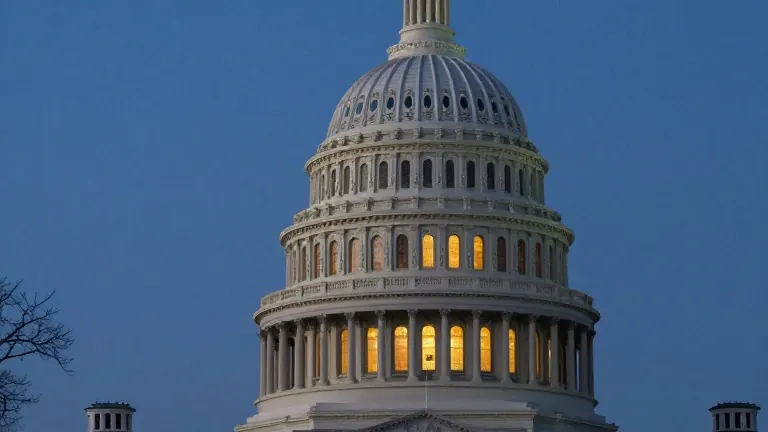
The mood on Capitol Hill changed sharply when lawmakers returned to Washington for the first time since the midterm elections.
Republicans arrived as lame ducks after a decisive loss, while Democrats returned with expanded majorities. NBC News analyst Sahil Kapur described the Republican mood as shell shocked. The party now faces a long list of unfinished business as it prepares to cede control of the chamber.
The election results showed a clear voter backlash against President Donald Trump. Exit poll data analyzed by Joelle Gross indicates that millions of Americans who voted for Trump in 2024 switched to Democratic candidates this time. Frustration over the economy and concerns about the state of American democracy drove the shift. Democrats also re-energized young and Latino voters, which helped them capture Senate seats in states previously considered firmly red.
The crossover was substantial in both chambers. About 13% of 2024 Trump voters supported Democratic Senator Jon Ossoff in Georgia. Similar double-digit support appeared for James Talarico in Texas and Mark Warner in Virginia. Nationally, 7% of former Trump voters chose Democratic House candidates. By comparison, only 2% of Kamala Harris voters split for Republican House candidates.
The next six weeks are packed with critical deadlines. Lawmakers must pass a government funding bill by December 11 to avoid a shutdown. They also need to complete the National Defense Authorization Act and a new farm bill. Other urgent items include renewing FISA Section 702 surveillance, negotiating permitting reform, and deciding on a college sports bill.
The House will consider a resolution to impeach Defense Secretary Pete Hegseth, a move led by Representative Thomas Massie. The Senate will review presidential nominees during the same period. Democrats are pushing to use their new mandate to influence policy. Senator Michael Bennet of Colorado urged colleagues on Saturday to reject cloture on any package that includes funding for the Iran war. He argued that voting for billions in additional war funding without congressional oversight would be an abdication of responsibility.
Republicans are divided on how to handle their transition. Senators John Thune, John Barrasso, and Tom Cotton are favored to keep their top minority positions. However, Senator David McCormick of Pennsylvania has called for a delay in the leadership selection meeting. McCormick, who rarely challenges leadership, said the party needs to discuss what went wrong before moving forward. Thune noted that the election offers an opportunity for reflection. Democrats are poised to take power on January 3, securing some of the largest majorities seen since 2009.
More Politics · National news · Report a business · Got a Story?