Stony Brook team finds lithium boosts flow battery capacity
New study shows swapping sodium for lithium in iron-based electrolytes increases solubility by up to eight times.
By Aiko Soto ·
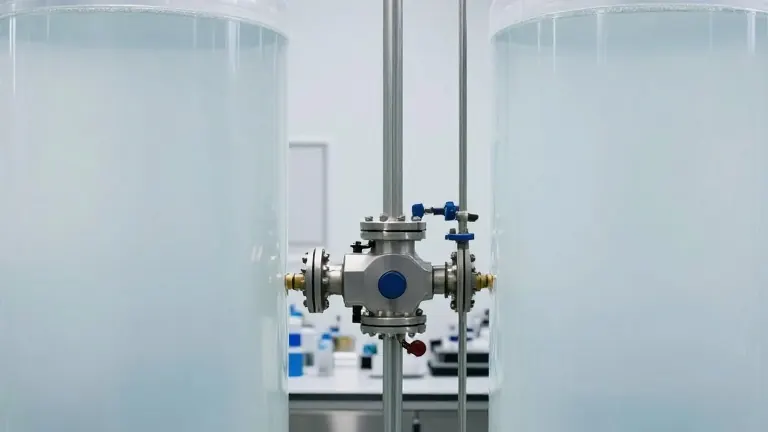
Researchers at Stony Brook University and Purdue University have identified a way to make redox flow batteries store more energy using cheaper materials. The team found that replacing sodium or potassium ions with lithium in ferri/ferrocyanide-based electrolytes significantly increases how much active material can dissolve in the liquid.
Nav Nidhi, a professor of Materials Science and Chemical Engineering at Stony Brook, explained that renewable energy sources like solar and wind are intermittent. Demand for electricity continues even when the sun is not shining or the wind is not blowing. Redox flow batteries address this by storing excess power and releasing it later. These batteries keep energy in two separate tanks of liquid electrolyte. A membrane separates the liquids while allowing ions to pass through a central cell.
The study, led by Nidhi, PhD candidate Kuldeepsinh Raj at Stony Brook, and Professor Xiaoliang Wei’s team at Purdue, explores alternatives to vanadium-based systems. Vanadium is reliable but expensive. Ferrocyanide batteries use iron paired with sodium or potassium, offering a lower cost but lower energy density due to limited solubility. Mahla Sarfaraz Khabbaz at Purdue conducted the experimental work, while Raj handled the computational modeling.
Raj reported that lithium-based ferrocyanide was approximately six to eight times more soluble than sodium- or potassium-based counterparts under strongly alkaline conditions. This higher solubility allows more energy to be stored in the same volume of liquid. In conventional lithium-ion batteries, energy and power are linked because they rely on solid electrodes. Flow batteries decouple these factors. Energy capacity is determined by tank size, while power is set by the cell size. This design allows operators to scale storage without changing the core electrochemical components.
Molecular dynamics simulations and quantum chemistry calculations revealed why lithium performs better. Raj noted that lithium ions interact strongly with both water and ferrocyanide. These interactions form connected, water-containing structures that stay dissolved even at high concentrations. This mechanism explains the delayed saturation observed in the new electrolytes.
The increased concentration brings a trade-off. More concentrated electrolytes have higher viscosity, which makes them harder to pump and may reduce overall battery efficiency. The team believes this technology will be particularly useful for stabilizing renewable energy grids. Solar farms could store daytime generation for evening use. Making these batteries more affordable and durable would help integrate renewable sources into the electricity supply more reliably.