Spain Calls European Bomb Threats Hybrid Warfare After Latest Air Disruptions
Spain's foreign minister described the coordinated hoaxes as a form of psychological warfare, while authorities investigated links to a banned Russian movement.
By Aiko Soto ·
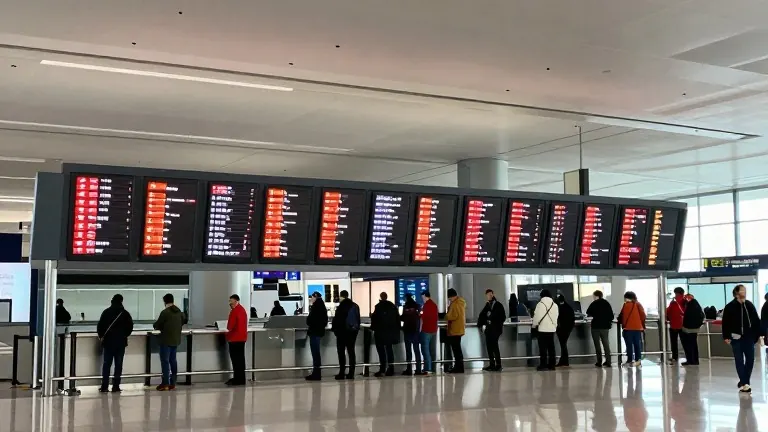
European air traffic experienced its third major disruption in one week on Friday, as a new series of bomb threats forced officials to scrutinize passenger flights across the continent. The latest round of alerts proved to be hoaxes, adding to a pattern of instability that has persisted since Tuesday. While no explosive devices were discovered and all aircraft landed safely, the frequency of the incidents has heightened anxiety among travelers and regulators.
Danish police opened an investigation into threats targeting air traffic at Copenhagen airport, concluding in their initial assessment that passengers were not in immediate danger. The airport maintained normal operations during the alert. In Prague, Czech authorities reported nine affected flights, including four arriving and five departing, with no cancellations or diversions recorded locally. However, an Italian airport authority source noted that a Wizz Air flight from Prague to Rome was diverted to Venice, where it landed without incident.
French officials confirmed four separate threats against aircraft flying over French territory, with all planes reaching their destinations safely. In Portugal, a Ryanair flight from Rome to Lisbon triggered a security operation after landing due to a bomb alert. The accumulation of these events led Spanish Foreign Minister José Manuel Albares to characterize the situation on TVE as more than a series of random errors. He stated, "The most reasonable assumption is that we are facing an attempt at hybrid aggression and a form of psychological warfare."
Security experts have observed that the threats share specific characteristics of a coordinated hybrid attack, though they allow for the possibility of copycat actors or individuals acting on personal grievances. No government has formally assigned blame for the disruptions. The current wave follows a string of sabotage attempts across Europe, including hits to German electricity substations, Baltic defense facilities, and French supermarket refrigerators. Many officials suspect the campaign is linked to European support for Ukraine, viewing the attacks as low-cost and deniable disruptions.
On Thursday, an Italian airport source revealed that emails sent to airlines in Rome and Milan claimed to originate from "fighters of the Male State." The group was founded in 2016 by Russian blogger Vladislav Pozdnyakov and was later banned in Russia. Pozdnyakov stated that the movement no longer exists and denied any involvement in the current threats. Reuters has not independently verified the sender of the emails, and the identity of those behind the other alerts remains unconfirmed.