Poppy Fields Expand Beyond Afghan Borders
Satellite data shows 9,000 hectares of new cultivation in Balochistan as Afghan farmers move into Pakistan and Iran.
By Aiko Soto ·
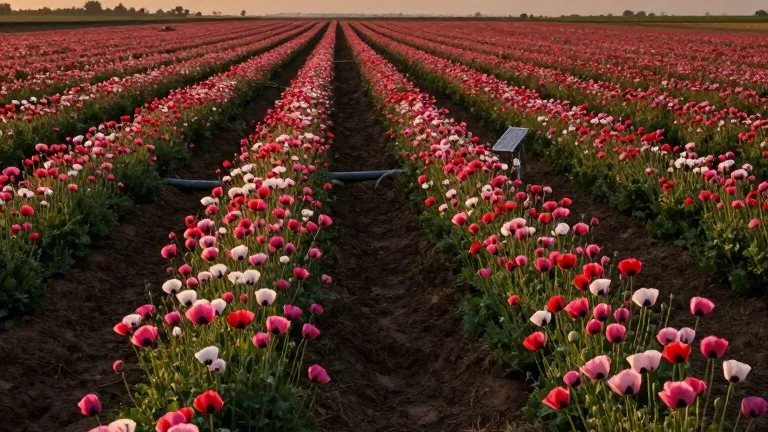
Satellite imagery from the British firm Alcis identified more than 9,000 hectares of poppy cultivation in Pakistan’s Balochistan province in 2026. This expansion marks a major shift in global opium production following a 2022 Taliban ban that drastically reduced output in Afghanistan. David Mansfield, a UK-based expert on illicit drugs, stated in an August report that the remote borderlands of Pakistan, Iran, and Afghanistan have become a global center for opium production.
The new cultivation is concentrated in the Loralai and Killa Abdullah districts of Balochistan. Mansfield noted that Afghan farmers from Kandahar and Helmand provinces are crossing the border to lease land. They bring capital and expertise, investing in infrastructure such as solar-powered wells. Abdul Qahar Wadan, a former National Assembly member, claimed that senior military officials and pro-government power brokers support this growth by taking commissions from growers. Monawar Hussain, the district chief administrative officer, disputed the scale of the expansion, arguing that eradication campaigns reduced the crop. However, Alcis data shows no clear evidence of such eradication in 2026.
A similar trend is occurring in Iran’s Sistan-Baluchistan province. Afghan farmers are working as tenants and sharecroppers, leveraging family ties to secure land. Satellite images from 2026 show extensive fields using drip irrigation, a costly method that suggests growers expected the crop to survive. Mansfield described the shift as a move from mixed farming to large-scale poppy monoculture. Iranian authorities have focused on the war against the United States and Israel since late February, leaving them unable or unwilling to destroy the 2026 crop.
Context for this expansion includes economic pressure on farmers. In Pakistan, drought and flash floods have damaged traditional fruit farming. Lala Jan Kakar, a resident of Killa Abdullah, said the income from poppies now far exceeds that from fruits. In Afghanistan, production is rebounding in Badakhshan and the southwest despite the ban. Mansfield reported that southwestern cultivation almost doubled between 2025 and 2026. Farmers are hiding poppy crops within wheat fields and behind compound walls. A recent Taliban directive barring home searches without a court order may encourage further expansion in 2027.