Virginia Boy Honored for Sensory Emergency Tools
Ledger’s LGM bags, funded by his own savings, are now standard equipment for Henrico County first responders.
By Aiko Soto ·
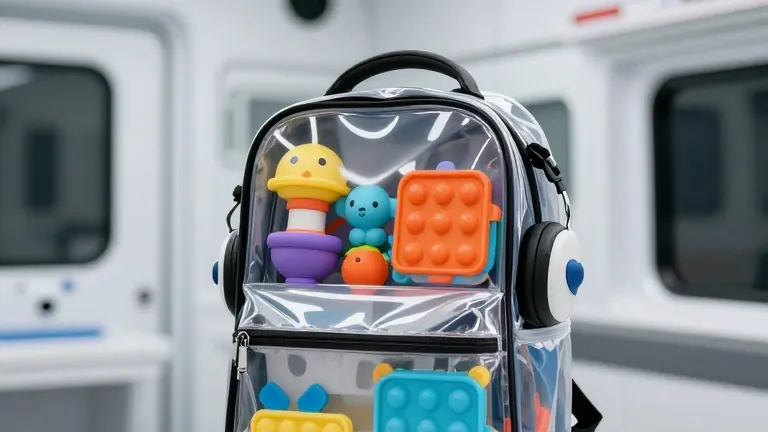
Virginia’s first responder agencies are standardizing a new kit designed to help autistic patients stay calm during emergencies, a program initiated by a local boy. Ledger, nine years old, has been named TIME’s Kid of the Year for his contribution to this effort.
The idea originated in Prince George County after Sergeant J.T. Mann, a veteran of emergency services, searched for a missing autistic child. Mann found the boy hiding under a grill cover. He asked his son, who has been diagnosed with autism, what would make him feel safe if encountered by strangers. Ledger listed stuffed animals, noise-canceling headphones, and fidget spinners. He also specified that the container must be transparent so non-verbal children could point to desired items.
Ledger funded the first prototypes with $100 from his piggy bank. "He said, 'Dad, I want to do this myself initially,'" Mann recalled. The boy made the first bags himself and did not ask for the money back. Those initial packs were distributed to local teams.
The initiative, named LGM after Ledger’s initials, has expanded to four states. Over 432 bags have been distributed across Virginia, West Virginia, North Carolina, and Florida. The program has received coverage in national media and even featured on billboards in Australia.
In Henrico County, Firefighter Courtney Koppelman championed the program’s adoption. She joined the Henrico Division of Fire recently after serving in Hanover County. Koppelman grew up with a brother who had spina bifida and a learning disability. "It’s really close to my heart," Koppelman said. "So it’s great to meet people where they are and make them feel safe and heard and helped."
Koppelman had previously carried personal sensory bags on calls because ambulances are loud and visually overwhelming. She noted that the tools help not only autistic children but also elderly patients with dementia and adults experiencing trauma. Dr. Anjali Ferguson, the office of medical director, stated that the bags bridge the gap between field care and hospital resources. "But we don’t have that in the field," Ferguson said. "So this sort of bridges that gap between what we have available to us in the field and what we have in the hospital."
The bags are now placed on all frontline Henrico ambulances, EMS captain vehicles, and with police crisis intervention officers.