Rivian Fleet Sends 400,000 Daily Clips to New UK Unit
The automaker acquired Third Dimension to convert routine driving footage into 3D simulations for testing its self-driving software.
By Aiko Soto ·
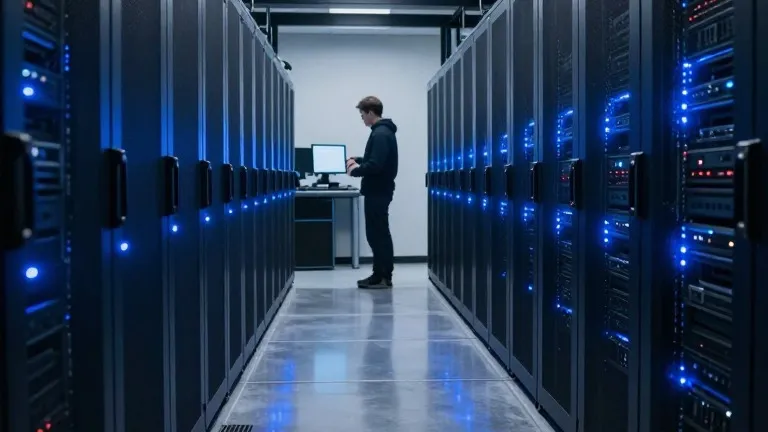
Rivian's vehicle fleet transmits more than 400,000 driving sequences to its servers every day. The company acquired Third Dimension, a 15-person startup in the United Kingdom, to process that volume of data. The deal was first reported by TechCrunch, and Rivian has not released the purchase price.
Third Dimension was founded in 2024 by Tolga Kart and Piotr Sokólski. Kart previously worked on Autopilot simulation at Tesla and led engineering at Parallel Domain. Sokólski spent four years at Wayve developing neural simulators for autonomous vehicles. The startup raised $7 million in a seed round led by Felicis in October 2024. It originally targeted game studios, film productions, and the military as potential clients.
The entire team will join Rivian's autonomy and AI group, which is led by James Philbin. The acquisition expands Rivian's operations in London, where most of the new staff are based. Philbin told TechCrunch that simulation is central to training and validating the company's autonomous driving systems. He described Third Dimension's technology as a tool that turns real-world data into detailed 3D environments.
The system relies on footage from owners of the R1S, R1T, R2, and commercial vans who opt into data sharing. While most driving events are uneventful, autonomous systems struggle with rare occurrences. These include a mattress in the fast lane, a police officer waving traffic through a red light, or a child running between parked cars. Engineers can recreate these specific scenes in 3D and alter variables to test the software's response.
Other manufacturers have pursued similar strategies. Waymo unveiled its World Model in February, which is built on Google DeepMind's Genie 3. Tesla has also demonstrated a neural world simulator for its Full Self-Driving software. Rivian's approach focuses on rebuilding real streets from existing fleet data rather than generating entirely new scenarios.
The acquisition occurs as Rivian faces strict deadlines for its autonomy roadmap. In March, Uber agreed to invest up to $1.25 billion in Rivian to deploy R2 robotaxis. Only $300 million is paid up front. The remaining funds depend on meeting specific milestones. These include placing 10,000 driverless R2 vehicles on Uber's network in San Francisco and Miami starting in 2028.
Consumer features are also on a tight schedule. Rivian's point-to-point driving feature will reach a small group of invited Autonomy+ owners later this year. Those testers must sign a nondisclosure agreement. CEO RJ Scaringe originally promised eyes-off driving for 2026 in January 2025. The company has since targeted 2027 for that capability. Level 4 autonomy is planned for 2028 on the Gen 3 hardware shown at the company's AI and Autonomy Day.