Protesters Scale Crane at Microsoft Construction Site in Amsterdam
Clashes with police followed as members of Geef Tegengas occupied the Westpoort site to challenge AI infrastructure expansion.
By Aiko Soto ·
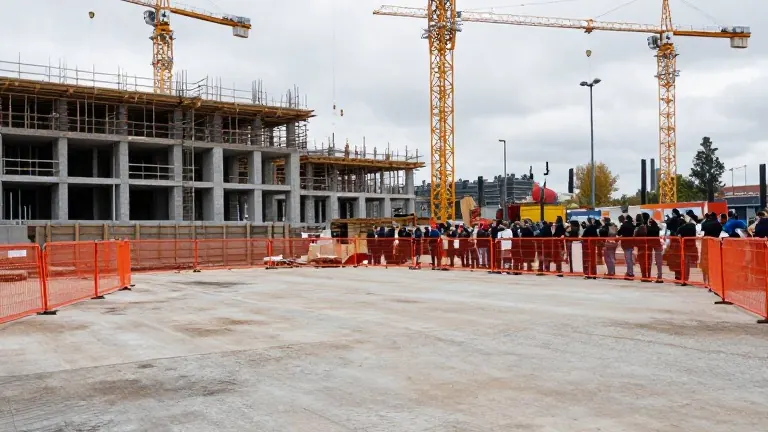
Hundreds of protesters gathered on both sides of the perimeter fence at the Microsoft datacentre construction site in Westpoort, Amsterdam, marking a sharp escalation in local resistance to AI infrastructure. The direct action unfolded on a Friday, coinciding with a wider European push to slow the rapid buildout of energy-intensive facilities.
Members of the Dutch direct action group Geef Tegengas breached the site boundary, clashing with police who attempted to halt the occupation. During the intrusion, several activists climbed a crane and ignited flares. Others attached helium balloons to construction equipment, creating a visible marker of their presence on the active build site.
Police told Dutch public broadcaster NOS that officers used force in an effort to stop the entry and make arrests. One officer sustained minor injuries during the confrontation. Activists from both Geef Tegengas and the broader Stop Dirty Data Centres coalition reported that police deployed teargas against those trying to enter the premises. Local media and organizers confirmed that the crowd size reached into the hundreds.
The break-in was distinct from the concurrent pan-European campaign, though both targeted the same location. Stop Dirty Data Centres, a coalition including national branches of Greenpeace and Friends of the Earth, kept its affiliated members outside the fence. The group stated it did not coordinate the direct action but viewed the tactic as a logical response to communities being excluded from decision-making processes.
Banners hung by the protesters inside the site targeted specific corporate partnerships. The signs objected to Microsoft's services provided to the Israeli military and to US Immigration and Customs Enforcement. The visual protest emphasized the intersection of technology infrastructure with geopolitical conflicts and border enforcement.
Roos Molenaar, an activist with Geef Tegengas, framed the confrontation as part of a larger struggle against oppression. She stated, "We won't accept Amsterdam being used for the creation of AI slop and the facilitation of genocide," adding that the datacentre was consuming local drinking water to enrich wealthy stakeholders. Her comments linked the local environmental cost to global political dynamics.
Owen Espley, the campaign coordinator for Stop Dirty Data Centres, noted that big tech and government entities were proceeding with large-scale development despite public concerns. He said, "Big tech and government are racing ahead with large-scale datacentre development despite significant public concern about the impacts on local communities, natural resources and other industries." The group had called for moratoria on new construction across the continent.
Similar demonstrations occurred in other European cities during the same two-day period. Smaller protests took place in central Bristol in the UK, at a datacentre in Berlin, outside the Polish parliament in Warsaw, and on the main square in Zagreb, Croatia. Additional actions were scheduled for Saturday, extending the geographic reach of the campaign.
Microsoft responded by saying it was aware of the demonstration and that the wellbeing of people at and around the site was its primary concern. The company stated it respected the right to peaceful expression but did not condone unlawful actions or situations that posed safety risks. Pure Data Centres, the site owner, echoed this sentiment, noting that entering a live construction site was both unlawful and dangerous. The company asked those on site to leave safely and engage in dialogue.
The event occurs as European governments continue to support AI datacentre construction to generate tax revenue and compete with the United States and China. In the United States, midterm elections held this week saw voters approve nearly every proposed datacentre moratorium on the ballot. Last week, an investigation by the Guardian and Investigate Europe revealed evidence of dangerous working conditions for laborers building these facilities.