Orbital Leverage: Starlink Disruption Tests Ukraine's Defense
A sudden slowdown in SpaceX's military satellite service revealed a deep dependency that left Ukrainian forces vulnerable to Russian strikes.
By Chioma Kuznetsov ·
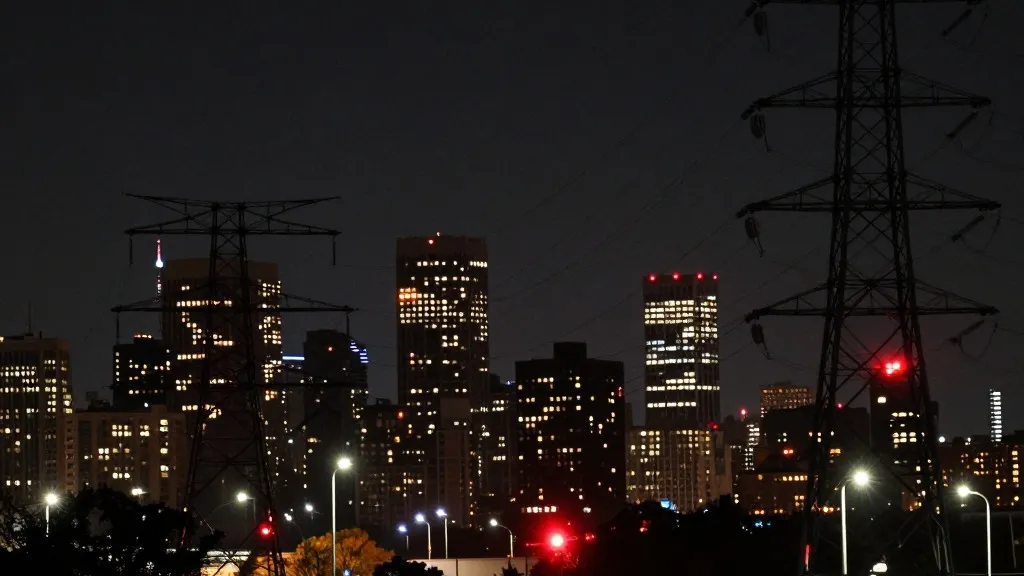
Ukrainian defense systems hit a wall last week when satellite speeds triggered a service cutoff. The glitch stopped interceptors from tracking Russian drones. This failure made it easier for enemy forces to target the country's energy grid. The disruption was not just a technical hiccup. It highlighted a fragile link between a private company and a national war effort. The stakes were high and the consequences were immediate.
The numbers tell a sharp story. Two people died in the attacks that followed the slowdown. At least seventeen others were injured. The specific trigger was speed. Terminals moving too fast could no longer connect to Starshield. This is the military version of Starlink used by Ukraine. When the interceptors lost signal, they could not counter the bomb carrying drones effectively. The result was a gap in protection during critical moments.
The people involved are at the center of a political storm. President Volodymyr Zelenskyy said the move felt like a direct message from the United States. He noted that Ukraine had no advance notice of the change. This action occurred as tensions rose between him and President Donald Trump. Public criticism followed quickly. Many blamed Trump for abandoning Ukraine. Others pointed the finger at Elon Musk, the CEO of SpaceX, for enabling the president. The public anger was broad and intense.
The explanations have shifted since the incident. Musk initially said SpaceX had no control over Starshield. He claimed the US military makes these decisions. The White House denied taking any action. Later reports suggested a different sequence. Musk reportedly proposed the slowdown to Trump. The president then accepted the idea. Eventually, it was reported that Musk ordered the restrictions himself. Access to the service has now been restored in Ukraine.
The stakes extend beyond this single conflict. Ukraine relies heavily on US technology for its defense. Access has been limited before. In 2022, coverage was not extended to support a counterattack in Crimea. Experts say this episode shows how much leverage has accumulated in one place. A single unelected executive now holds significant power. This is a result of the space industry being concentrated in one company. The dependency is deep and structural.
Wendy Whitman Cobb of the School of Advanced Air and Space Studies notes that SpaceX has a near monopoly on launch. Rivals like United Launch Alliance, Blue Origin, and Rocket Lab exist. However, none match SpaceX in frequency, mass, or cost. Space economist Oğuz Karasu of the Oxford Space Initiative agrees. He says the monopoly is practical rather than legal. Launch makes up about eight percent of the industry. But the rest cannot function without it. This creates a bottleneck that affects everyone.
SpaceX has built a massive network in low Earth orbit. It has launched more than 10,000 Starlink satellites. These use Falcon 9 rockets to keep costs low. Andrew Reddie of the University of California, Berkeley, calls this situation an antitrust issue. SpaceX launches satellites for constellations it owns. This leaves little incentive to launch for competitors. SpaceX has launched some Amazon Kuiper satellites. However, complaints are rising about Falcon 9 prices for low Earth orbit. Starlink prices have also climbed since its 2020 beta.
The impact reaches into daily life through GPS and satellite communications. Whitman Cobb points out that a GPS outage affects more than maps. It can disrupt fuel pumps, ATMs, and financial transactions. Even ambulance dispatch could be delayed. Karasu warns that giving one person so much control is not good for society. The risk is not just military. It is a broader societal vulnerability that is often overlooked.
Even major government agencies face exposure. NASA and the Space Force are not immune. Reports say SpaceX is retiring the Falcon 9 rocket. It will take no new missions after 2028. The Space Force is struggling to find launch options for military satellites. Questions are also being raised about NASA's access to the Crew Dragon capsule. A recent issue with Falcon 9 briefly grounded the rocket. This raised concerns about the Crew 12 launch. NASA continues to back Boeing's troubled Starliner. It also contracts with companies like Rocket Lab and Blue Origin.
Michele Scataglini of the Oxford Space Initiative says the market needs more competition. Without it, she argues, it is not a market. Reddie notes the central security problem. A non state actor is making decisions as if it were a government. This directly affected Ukraine's defensive capability. Scataglini calls it a global wake up call. She warns that one firm could decide which countries get access to space. This is particularly true for the Global South. Whitman Cobb is cautiously optimistic that this event will raise awareness. However, she notes it took people dying for the problem to be fully recognized.