New Zealand Election Leaves 131-Seat Parliament in Near-Deadlock
Incumbent Prime Minister Christopher Luxon leads a bloc by one seat, but special votes could shift the balance in weeks.
By Ayanda Boateng ·
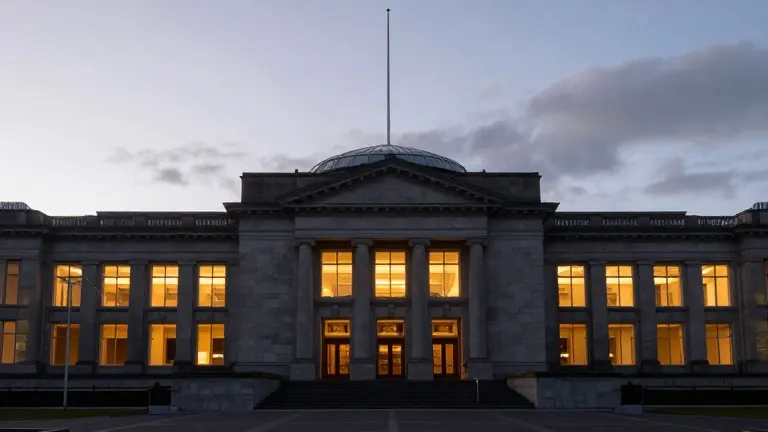
New Zealand’s Parliament now contains 131 members, creating a razor-thin margin that leaves the country without a clear winner after Saturday’s election. The conservative bloc led by Prime Minister Christopher Luxon currently holds 67 seats, just one more than the 66 required for a majority. The left-wing bloc holds 57 seats, leaving a gap that neither side can bridge without external support.
The result marks a sharp decline for the two traditional major parties. The National Party, led by Luxon, captured 29.21 percent of the preferred party vote. The Labour Party, led by Chris Hipkins, received 29.36 percent. Despite similar party vote shares, National secured 42 seats by winning local constituency races, while Labour secured 36 seats. This disparity gives National a slight initial advantage in forming a government.
The decisive factor in the upcoming negotiations is the newly elected Opportunity party. Led by 38-year-old business consultant Qiulae Wong, the group won seven seats in its first successful parliamentary run. Wong stated she is willing to work with either side to form a government. Her party’s presence forces both major blocs to offer deeper policy concessions to secure her support.
Other minor parties also gained ground, complicating the path to power. The libertarian ACT party won 13 seats, and the populist New Zealand First party won 12. On the left, the Greens secured 16 seats and the Indigenous rights group Te Pāti Māori won five. These numbers reflect a voter shift away from the major parties and toward ideological flanks.
Official results are not final until November 27. Electoral officials began counting nearly 400,000 special votes on Sunday, a process expected to take three weeks. These ballots, which often include votes from New Zealanders living abroad, have historically added one or two seats to left-wing parties. Such a shift could erase National’s one-seat advantage, though it may not be enough for the left to form a majority on its own.
Luxon did not declare victory on Sunday. He led a caretaker government and told reporters to take a break from politics for the next three weeks. He blamed global economic shocks for public dissatisfaction and noted that other incumbent governments have faced similar scrutiny over living costs. He confirmed that National would lose several senior figures, including the ministers of finance and defense, the speaker of parliament, and the attorney general.
Hipkins, who lost office in 2023, also faced a defeat in the party vote. His bloc falls short of a majority and would likely need Wong’s support to govern. Luxon previously ruled out negotiating with Wong but sidestepped questions on Sunday about whether his slim lead had changed his mind. Parties will not begin formal government negotiations until the final tallies are released on November 27.