Ancient Mars rock found in Mali reveals early water activity
A 4.1 billion year old meteorite offers the first direct evidence of water interacting with the Martian crust during the planet's infancy.
By Aiko Soto ·
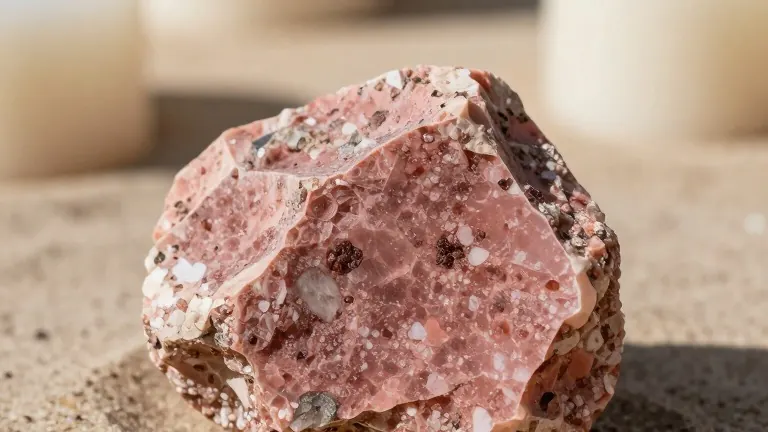
Scientists have identified a rose-colored rock in the Sahara that provides direct evidence of water activity on Mars 4.1 billion years ago. The meteorite, designated Teghaza 001, is one of the oldest samples of Martian material ever recovered on Earth. Its chemical makeup suggests that liquid water altered the planet's outer crust shortly after Mars formed.
The specimen was discovered in 2022 by hunters on a salt plain in Mali. It consists of eight fragments with a combined weight of 798.5 grams. The largest piece weighs 442 grams. Yang Liu, a planetary scientist at NASA’s Jet Propulsion Laboratory, led the study published in Science on October 29. Liu noted that the rock offers a rare view of the early Martian crust and mantle from a period when life was just beginning on Earth.
The rock formed from magma that originated in the planet's inner mantle before cooling into the outer crust. Liu stated that the chemistry indicates the sample comes from a specific crustal area not previously sampled by researchers. The impact of an asteroid or comet likely blasted the rock into space, where it orbited the sun for millions of years before entering Earth's atmosphere.
Initial classification had labeled the sample a shergottite, the most common type of Martian meteorite. These typically date to less than 600 million years old. Liu almost passed on the analysis but noticed zircon crystals within the rock. These crystals act as time capsules, allowing for precise dating. Analysis confirmed an age of at least 4.1 billion years, placing its formation within the first 400 million years of Mars's existence.
Coauthor Hayward Melton, a doctoral student at the California Institute of Technology, helped confirm the age using a new laser method. This technique vaporizes tiny regions of the sample rather than dissolving larger pieces. The process reduced dating time from a month to a day and preserved more material for future study. The laser beam used was one-tenth the diameter of a human hair.
The meteorite is a basalt, similar to rocks found on Earth's ocean floors. It contains two calcium-rich minerals in proportions never seen in other Martian samples. It also has unique oxygen isotope abundances. These features indicate the rock interacted with water in the ancient crust. Melton said this data helps explain why Mars became dry while Earth retained its water, which has implications for understanding planetary habitability.
Researchers identified 13 potential source locations in Mars's southern highlands by comparing the rock's composition with data from NASA missions. Matthew Genge, an associate professor at Imperial College London, described the find as a window into Mars's earliest stages. The rock was acquired by the Maine Mineral & Gem Museum in Bethel, Maine, for an undisclosed amount. Darryl Pitt, the museum's meteorite division chair, brokered the deal and called the specimen a possible feast of discovery.